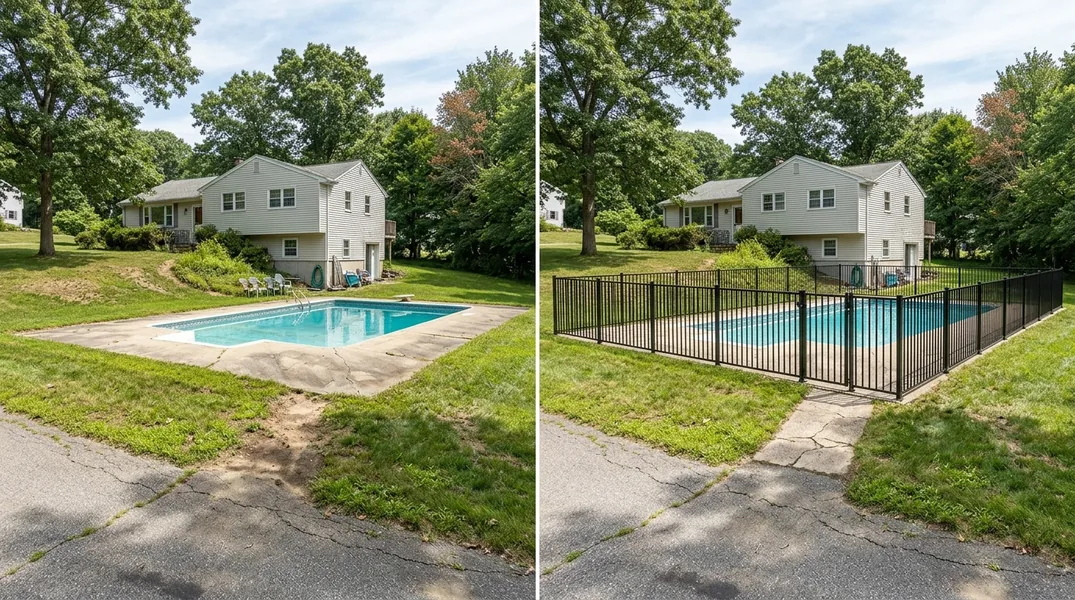
Why Pool Fence Rules Matter for Worcester Homeowners
If you are adding a pool to your backyard in Worcester, the fence around it is not just a landscaping choice. It is a safety barrier, and Massachusetts treats it that way. The state has adopted pool barrier provisions that mirror the International Residential Code, and local inspectors in Worcester enforce them during permitting. Understanding these rules before you buy materials or schedule installation saves you time, money, and the headache of tearing out a fence that fails inspection.
The core idea behind every pool fence code requirement is simple: keep unsupervised children away from the water. That means the barrier has to be tall enough, strong enough, and difficult for a small child to climb or squeeze through. It also means gates must close and latch on their own. Homeowners often focus on aesthetics first, but a fence that looks great and fails code is not a finished project. Starting with the requirements keeps the design process grounded.
Pool Fence Height Requirements and Barrier Basics in Massachusetts
The most common question we hear is about pool fence height requirements. In Massachusetts, the barrier around a residential pool generally must be at least 4 feet high, measured on the side facing away from the pool. Many homeowners choose 5 feet for extra peace of mind, especially with young children or dogs in the household. The fence cannot have footholds or handholds that make climbing easy, and horizontal rails spaced like a ladder are a red flag for inspectors. Chain link can work if the mesh is small enough, but the diamond pattern must not create a ladder effect.
Gaps matter as much as height. Openings in the fence, including spaces under the bottom rail, should be small enough that a child cannot pass through. Decorative fencing with wide pickets often fails this test, which is why Aluminum & Ornamental Iron Fencing needs careful spacing. The barrier also has to completely enclose the pool with no gaps at the house, deck, or property line. If your pool sits close to a neighbor's fence, that shared barrier may not count unless it meets every requirement on its own. A professional site assessment is the fastest way to know what you are working with.
Self Closing Pool Gate: The Detail Inspectors Check First
A self closing pool gate is non-negotiable under Massachusetts pool fence code requirements. Every gate in the barrier must close and latch automatically from any open position, and the latch must be positioned high enough or designed so a young child cannot reach it from the outside. Gates must open outward, away from the pool, and they must swing freely enough to latch on their own without a push. Springs and hinges wear out over time, so even a gate that passed inspection last year can fail a re-inspection if the hardware has loosened.
This is where installation quality shows. A gate hung slightly out of level will drift instead of latching, and a latch that sticks in humid weather defeats the whole purpose. When we install a pool barrier, we test every gate through dozens of cycles and adjust the tension so it closes reliably in rain, heat, and cold. If you already have a fence and the gate no longer self-latches, that is a repair worth prioritizing before the swimming season starts. Call Worcester Fence at (508) 882-6528 to schedule an inspection of your existing gate hardware.
Choosing Materials That Meet Code and Fit Your Yard
Once you know the rules, material choice becomes a design conversation. Wood & Privacy Fence Installation is popular for pool enclosures because solid panels block sightlines and create a private retreat, but the pickets must be spaced tightly enough to prevent climbing and squeezing. Vinyl and composite options offer low maintenance and consistent spacing, which makes code compliance easier to guarantee. If you want to see the pool from the house, ornamental aluminum with properly spaced pickets can satisfy the barrier rules while keeping the yard open and airy.
Height, spacing, and gate hardware all interact, so the material you pick should be matched to the specific layout of your property. A pool set close to a deck may need a different barrier strategy than one in the middle of a large lawn. Homeowners in nearby towns like Westborough and Northborough often ask us to compare wood, vinyl, and aluminum side by side before deciding. We walk through the tradeoffs in durability, maintenance, and appearance so the final fence meets code and still looks like it belongs in your backyard.
Pool Fence Installation Near Me: Permits, Inspections, and What to Ask
Before any posts go in the ground, confirm the permitting path with the city. Pool barriers typically require a building permit, and the fence is inspected along with the pool. Ask your contractor who pulls the permit, who schedules the inspection, and what happens if the inspector flags a gap or a gate that does not latch. A reputable installer will build to the code from the start rather than treating inspection as a surprise. It also helps to ask for the specific measurements in writing: fence height, picket spacing, gate swing direction, and latch height.
Good questions to ask any pool fence contractor include whether they have installed barriers that passed Worcester inspection, how they handle slopes and corners, and what warranty covers gate hardware. You should also ask about timelines. Pool fence installation often happens in sequence with pool construction, and a delay in the fence can hold up the final inspection. If you are comparing bids, request a written scope that lists materials, hardware, and permit responsibilities so quotes are truly comparable. Our team is happy to review your plans and provide a free estimate with clear line items.
Pool Fence Cost in Worcester: What to Budget
Pool fence pricing depends on linear footage, material, terrain, and gate count. A simple aluminum barrier around a small above-ground pool costs far less than a custom wood privacy enclosure with multiple self closing gates and decorative panels. Sloped yards, rocky soil, and tight access between the house and property line can add labor. Homeowners should budget for the fence itself plus gate hardware, permits, and any removal of an old barrier. Getting a written estimate that separates materials from labor makes it easier to compare options and avoid surprises.
It also pays to think beyond the initial price. A cheaper fence that fails inspection costs more in the long run, and gate hardware that wears out in two seasons is a recurring expense. Spending a bit more on quality hinges, latches, and posts usually extends the life of the barrier and reduces maintenance. If you are planning a pool project in Marlborough or anywhere in the Worcester area, start the fence conversation early so the barrier is ready when the pool is. Reach out to Worcester Fence for a free estimate and a clear breakdown of what your project will cost.
Looking for a professional fence contractor in Worcester? Worcester Fence responds fast for all your fence needs.
Get a Free Quote